
Read This! The Amazing Generation

After reading Jonathan Haidt’s The Anxious Generation (Book-of-the-Month in April 2024), I immediately wished there was a youth-friendly version to help open the eyes of kids and teens to the effects of smartphones, screens, and social media. I’m pleased to recommend The Amazing Generation, which was released a couple of weeks ago!
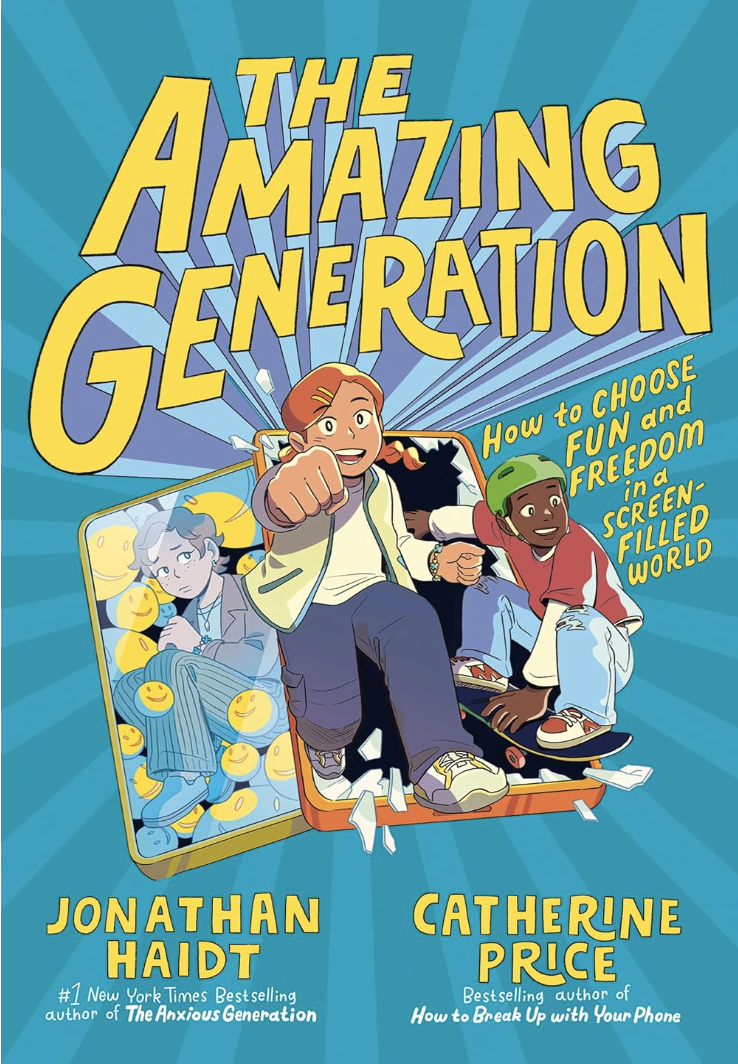
Haidt teamed up with Catherine Price, who wrote How to Break Up With Your Phone (updated & revised in 2025). The book does a great job of explaining data and statistics, and exposing the dark side of what tech companies have done to get especially young people addicted to their screens, in an age-appropriate way. It’s alarming without being too intense and dark for kids. The sweet spot is probably around 3rd grade and up, but it varies with each kid, so I recommend parents checking it out first.

It helps that the book is in full-color, with call-outs of key statistics, quotes from people young and old, and profiles of Rebels who are fighting against the Wizards and their Cursed Stones (reference to the opening story, which intrigued all of the kids I read it to). It super helps that there’s a graphic novel interspersed throughout the book. One 6th grade girl said, “This book is too informative. I like the graphic novel parts though.” 🤣 Rather than take that as defeat, I was glad she liked those parts, and hope she’ll read at least some of the “too informative” parts. A 5th grader and 7th grader I know both give the book a thumbs up.

Some of you might be surprised of my recommendation, knowing how I feel about graphic novels (post forthcoming), but with this topic, I take the “by any means necessary” perspective, and if the graphic novel genre draws more young people to read the book, I’m all for it! This book is part of the “E” part of “FEAST” in The Tech Exit (Book-of-the-Month September 2025), and I’m thankful for this resource to educate ourselves and our kids and teens, and to start family conversations around tech use. You can suggest it to read for your family book club, or ease into it by reading the book yourself in sight of your kid so they’re curious about the book, or even leave it lying around the house. They’re bound to pick it up and read some, if not all, of it. The goal is to start the conversation!

This book is a great read for adults, too. The Amazing Generation distilled the core ideas of The Anxious Generation (though I still recommend that one for you all, too!), and it was helpful that the angle is positive, focusing on what can we do together to reclaim childhood rather than giving up and saying, “It is what it is.” And the call to action to be a rebel against “The Man” is always the way to my heart. Let’s be part of the revolution!

Book-of-the-Month for January & The Return of the Blog

Happy 2026! It’s a new year, and a new attempt to revive this blog as a way to keep people across Acts2 Network in the loop about new (and old) books, and to inspire us all to read more books through stories, photos, and who knows what else. I tried the podcast thing (sorry to everyone who got excited from the trailer), but blogging might be the best way for me to be consistent. I know blogs are so 2008, but if you know me, I’m actually totally 1998. 📟

For those of you who are new here, you can read the updated “about” section and peruse old posts. Sometimes I’ll refer back to old posts, as there’s some good stuff from back in the day, if I do say so myself. One thing is I realized multiple generations of kiddos have come and gone through Bibliopolis, and so I’m looking forward to a new generation of kids, college students, and adults growing to love reading, or at least like it a little more.

It was great to meet a lot of college students and recent grads at AWC this past week at the new ATC. I was personally so energized as I got to talk about some of my favorite books and heroes of faith with some of you at the book table!

The first Book-of-the-Month for 2026 is a book mentioned by one of our AWC speakers. After hearing a stirring message about prayer from Trace Hamiter from The Oaks Collaborative, I picked up Praying Hyde: Apostle of Prayer: The Life Story of John Hyde. I hadn’t heard of him before, and was challenged by the kind of singular priority he put on prayer. Rather than be intimidated or think, “I can never pray like that,” I decided to be inspired and apply some of the lessons from his life, and to commit to praying with more intensity and regularity. One lesson was he not only focused on prayer before and during a meeting or gathering, but gathered people to pray even more afterwards, so the word of God that was sown would not be snatched away (see “The Parable of the Sower” Mark 4). I found that timely, especially as we experienced God powerfully through AWC.

The book is actually a compilation of a few sources, including letters he wrote and biographical accounts. If you’re looking for a short book that will inspire and challenge you, give it a try!

Book-of-the-Month for June

Each month it’s “I can’t believe it’s…” but this time, I mean it! The school year is almost over and summer is upon us.

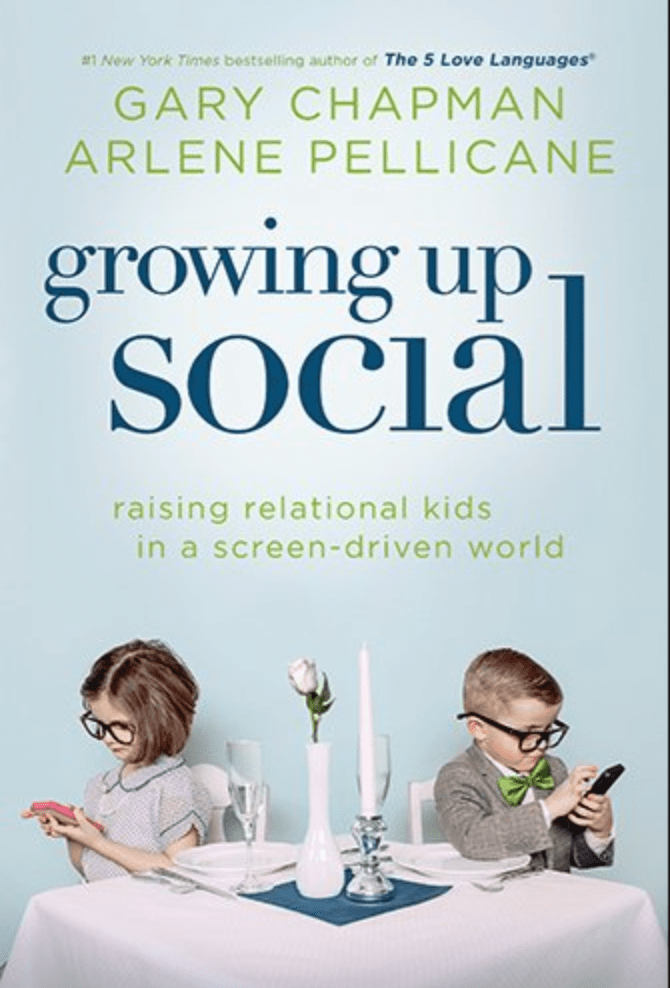
For June I’ve selected the book Growing Up Social: Raising Relational Kids in a Screen-Driven World. It’s written by Gary Chapman (of 5 love languages fame) and Arlene Pellicane, who wrote Screen Kids and whose children are featured in the documentary Screen Kids: In Their Own Words.

This book was written in 2014, but it doesn’t feel outdated. If anything, it feels even more relevant, especially reading it from the other side of a global pandemic that took screens and their place in our lives to another level.

The reality was we needed them in order to work, go to school, play with our friends, connect with family. In the years since this book was released, there’s also been time to conduct more research about the changes our devices and screens have wrought on children and adults alike.

You don’t have to be a parent or a youth or children’s worker in order to learn from this book. The fact is that all of us have been affected by our screens, whether it’s in how we deal with difficult emotions or boredom or awkwardness, what we consider entertainment and fun, and how we relate to people and view relationships. I think that the “A+ skills” of Affection, Appreciation, Anger Management, Apology, and Attention are useful for each of us to grow in, no matter how old we are! As someone who interacts with children and youth a lot, I’ve seen the effects growing up in the years of the pandemic have had in particular, and this book was helpful in thinking about what kind of skills and values I am instilling into our next generation.

The authors are realistic and offer hope that we can start wherever we are at to make positive changes that will be beneficial for our children, teens, and ourselves, and enrich our relationships with one another, in our families and communities. One thing I kept thinking while reading this book was that it would be difficult for parents who are trying to do this on their own, but thankful that in our community, we could support one another in our efforts to implement some of the relationship-prioritizing principles in the book, by doing it together!