Having taught primarily in high school and then in middle school, I’m in a self-paced crash-course on books for younger readers. This summer at Gracepoint Berkeley church, I’ve been hosting different groups of kiddos for reading hour each day, and so I’ve been getting to know a lot of different picture books and books for early readers.
I received a generous donation of three big boxes of picture books, and among them were a bunch of Arthur books. Even the older kids got so nostalgic and would read and reread them. So I didn’t think too much about them.
I didn’t grow up reading Arthur books by Marc Brown, though apparently they’ve been around as long as I have. And I definitely didn’t watch Arthur episodes on PBS, because I was a senior in high school when they started airing. (Two clues about my age, which is actually no secret, but it’s fun to solve even the smallest puzzle!)
Last week I had the chance to read my first Arthur books. I read them with a particular 6-year-old boy on the T-Rex team (1st-2nd boys) at our Zootopia Summer Camp. I’m sad to report that each book got successively disappointing. Hence the title of this post. Here’s a recap:
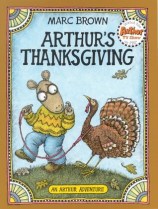
First up, Arthur’s Thanksgiving (1984). Arthur is in charge of the class Thanksgiving play, and he can’t find anyone to play the turkey. This is the main conflict, because as they state in the play, the whole point of Thanksgiving is turkey. Without turkey, there can’t be Thanksgiving.
The lesson: Arthur learns the skill of problem-solving in his leadership position, and he ends up doing whatever it takes to make sure the play goes on.
My beef: Maybe it’s my years of teaching inference, but the message of the play-within-the-book that Thanksgiving itself hinges on a turkey struck me as problematic. Nowhere in the book is there a mention of…giving thanks.
Strike 1.
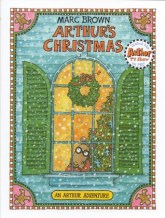
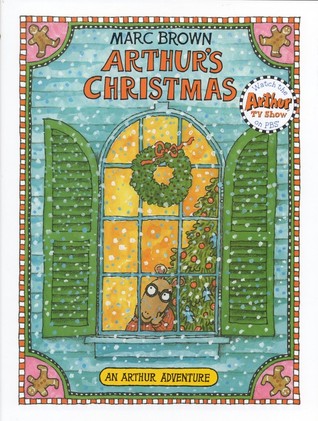
Next was Arthur’s Christmas (1985). While Arthur’s sister, DW, has a mile-long list of all the presents she wants, Arthur’s dilemma is trying to figure out what to get for Santa. Arthur figures out the “perfect” gift, which is rather funny, but DW realizes Santa might actually get repulsed by his gift, so she helps “solve” the problem.
The message: DW is a great sister, because she solves the problem in such a way to spare Arthur’s feelings from being hurt, and will still manage to get all her gifts from Santa.
My beef: I *think* we are meant to find Arthur’s focus on what to give rather than receive as admirable, but it’s stated too implicitly for a children’s book. So what we are left with is the message that DW is thoughtful and even sacrificial. But she only does what she does because she wants presents from Santa. DW’s greed for presents is dealt with only tangentially and through a passing comment from Grandma when she visits.
Strike 2.
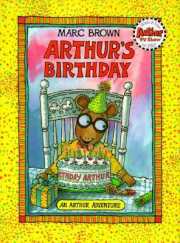
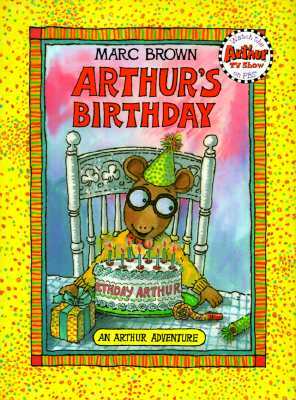
Last but definitely not least, Arthur’s Birthday (1991). It’s Arthur’s 8th birthday (remember this fact — 8th) and he’s going to have a party. But it’s the same day as Muffy’s party. OH NO! Arthur figures out a way to solve this problem of two different parties going on at the same time.
The message: Oh, that Arthur. He’s so clever and so kind, that he figured out a way to include everyone!
My beef: Francine, one of Arthur and Muffy’s classmates, is super excited because they can play Spin-the-Bottle. (Quiz: how old is Arthur turning again?) In separate conversations during the rising action, the boys decide to just go to Arthur’s party, and the girls to Muffy’s, but the boys say, “It won’t be fun without the girls” and vice-versa. And then the last page is Arthur opening one of his presents, and guess what it is? Yes, a bottle labeled “Francine’s Spin-the-Bottle Game” — yay!
Strike 3.
You might think I’m being too hard on Arthur, and they’re just cute stories after all. True, I’ve only read a few of the books. But my main problem is the Arthur books and television show are touted as educational, in the good PBS way. And they do educate, but what are they teaching? We need to be aware of the implicit messages our kids get from all media.
It’s subtle and might seem harmless enough, but I was surprised to find the 6-year-old boy I was reading the book with already knew what Spin-the-Bottle was. Even with limited screen time, our kids get all sorts of education from their friends, teachers, and just through walking around in our world. If you’re looking for books that are explicitly teaching lessons on how to treat other people (or the point of certain holidays), I recommend bypassing Arthur.
What’s your take on Arthur? Should I give him another chance? Did you read Arthur books or watch the show while growing up?

 The PBS website has a section for parents & education. In the Reading & Language section, they have a section of “Reading Milestones” broken down into Talking, Reading, Writing, and Activities/Games by age groups, starting from “Baby” to “Second-Third Grade.” They also have sections for Mathematics, Science, Learning Disabilities, Going to School, Music & Arts.

 Acts2 Books