The Case For Books (see what I did there?)

Many people at Gracepoint Berkeley church are rushing up to me saying variations of, “I’m *so* motivated and excited to read more books! But I haven’t read a non-required book in ____ years. I don’t know where to start!” After finding out a little more about people’s reading histories, I often recommend that people start with Lee Strobel’s The Case for _____ books, especially because many people associate Christian books, especially books on apologetics, with words like difficult, dry, boring, complicated, and are demotivated before even starting.
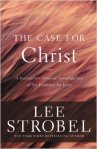
case for christStrobel, a former atheist, traces his journey to faith through his 1999 book, The Case for Christ: A Journalist’s Personal Investigation of the Evidence for Jesus. What I love about his books is that they are very accessible to the everyday person. While it is an apologetics book, it also reads very much like a story — it is investigative journalism, after all — and Strobel uses his background in journalism to weave in details, and even develop tension as he chronicles his own grappling with the evidence he encounters. It is both a compelling and edifying read!

For each chapter, Strobel investigates a different tough question regarding Jesus, through an interview with Christian apologists and theologians, including J.P. Moreland, Greg Boyd, and William Lane Craig. It is a great book for Christians who want to learn the evidence for why you believe what you believe, or how to present the evidence clearly and concisely. I’ve also found it is a great book for people who are not Christians, but seekers who are open to, or in the process of investigating the claims of Christianity.

Additionally, for each of The Case for… books, there is a “Student Edition” (middle and high school range) and a “For Kids” edition (for about 9-12 year olds). Bibliopolis patrons of all ages attest to how great they are.

The kindle version of The Case for Christ is currently $1.99! People often ask me my opinion on e-books. And while e-readers have done a fabulous job of simulating the sense of progress and even the act of flipping a page, I still think reading and holding a physical book, flipping and (sometimes ripping) actual pages is the best reading experience. But I’m no e-reader hater. I even like audiobooks (gasp!). I was kind of snobby about it all for a long time, but I’ve come to appreciate the pros and cons of all sorts of reading. In the end, reading an e-book is better than not reading any book. (You have to re-read that last sentence out loud…I’m on a roll today!)

Have you read any of “The Case for” books? Which is your favorite? (Mine is The Case for Faith.) What’s your take on e-books? Are you a proponent? Opponent?
Books From “Effects of Living in the Internet Age” Workshop

This past weekend I was able to present a workshop called “Effects of Living in the Internet Age” at the Gracepoint Berkeley College Winter Retreat. It’s a 2.0 version and release of the workshop originally called “Digital Citizens of the 21st Century,” which was an amorphous though vaguely intriguing title.

In it I recommended a couple of books, so I wanted to highlight them.

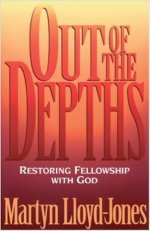
out of the depthsOut of the Depths: Restoring Fellowship With God by Martyn Lloyd-Jones is a must read. It is short, but every sentence is golden. I tried highlighting and annotating while reading this book, and ended up coloring it. He uses Psalm 51 as a framework for outlining the very foundations of repentance, and what it means to relate to God. This is the book where the “fight for your soul” quote from my workshop and from Suzanne’s workshop on reflection comes from. I usually read this books once a year or so. It is always clarifying and centering, bringing me back to the very basic truths of the gospel, and the implications of professing to be a Christian.


making all things new

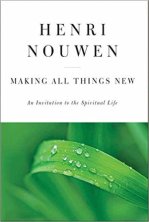
Making All Things New: An Invitation to the Spiritual Life by Henri Nouwen is another short book that is full of gems of wisdom. Nouwen accurate insights on the very noisy lives we live – both the outer distractions of modern life as well as the inner distractions of our souls – make his invitation to cultivate the discipline of solitude all the more compelling. This is another book I come to again and again, especially as our lives only get busier and busier.  If you can remove yourself from distractions (!) you can read this book in one sitting. It always jumps starts a prayer retreat or extended period of reflection over my life and in God’s word. I highly recommend it if you haven’t read it, or if you haven’t read it in a while.


download

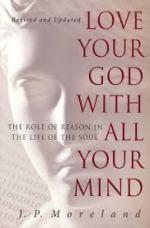
Love Your God With All Your Mind by J.P. Moreland is a more challenging a read than the previous two books. While Moreland is a philosopher, and this book focuses on the role of reason in our relationship with God, it is surprisingly more devotional than you might first presume! He challenges us to use the minds God gave us not only for the purposes of evangelism and apologetics, but in our worship and devotion as well. He challenges us to be people who can think critically and deeply in all areas of our lives.


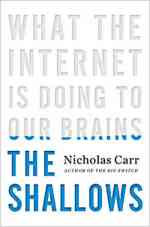
The-Shallows The Shallows: What the Internet Is Doing to Our Brains by Nicholas Carr is an engaging book and digestible book I recommend to people interested in starting to read about this topic. There are many out there, but I think this one is pretty even-handed in its presentation of the pros and cons of the Internet as a technology. What I appreciate about this book is that presents a history of our interactions with and adaptations to various technologies. At each juncture of history there was an outcry, and there were pros and cons — when we moved from an oral culture to a written one, when we went from the scroll to the codex, typewriter to desktop publishing, and so on. Full disclosure: I like Carr because he is much warier of the Internet than many others in his field. 🙂


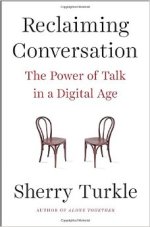
reclaiming conversationReclaiming Conversation: The Power of Talk in a Digital Age by Sherry Turkle, is the most recent of the books I’m recommending today. It is Turkle’s latest book, published in 2015, and currently my favorite of the books she has been writing in this field since…1981! Turkle analyzes the very conflicted relationship we have with all of our technologies, which enable us to connect, but also distance ourselves from each other, and from ourselves. She stresses the importance of being able to be alone and reflective about oneself (using Thoreau’s metaphor of the chairs…hence the cover image), before you can invite someone else into a dialogue, and then involve others in society. It’s a beautiful, chilling, and thought-provoking book that will cause you to rethink the way you interact with your phone, and with other people. Don’t read it if you don’t want to be disturbed and compelled to change some things. No joke!

Have you read any of the books I mentioned above? Do you have any thoughts to share, or other books to recommend?

Favorite Friday: “The C.S. Lewis Five” (a one-scene screenplay)

gbc[The Scene: Pastor Ed Kang‘s office hours at Golden Bear Cafe. The year: let’s just say it’s around the turn of the century. I know you’re surprised I was in college at the time, but you have to remember I started college when I was 8*. ]

Mind you, this was a gazillion years ago, so I’ve used creative license liberally in the following screenplay. But I do remember this encounter, and how I wanted to show Pastor Ed I was interested in conversing about things like books and literature — so above the fray of the typical college student. Ha!


HEK:  Pastor Ed, I love to read. What Christian books do you recommend I read? (hopeful this opens up the way to talk shop about books we have in common.)

EHK: Have you read C.S. Lewis?

HEK: (smiling, because The Chronicles of Narnia was a childhood favorite). Yes, I just love Lewis’ ability to explore spiritual truths through what seems to be an innocent children’s story. I do love me some Narnia.

EHK: (smiling graciously) Ah yes, Narnia is splendiferous, to be sure. Now, have you read Mere Christianity?

HEK: (puzzled because it seems kind of strange to call Christianity mere…) …um…

EHK: (fatherly chuckle, if Yoda chuckled) Much to learn, you still have, young padawan.

HEK: (Yes! I know this one!) Haha, Star Wars! I just love Star Wars

EHK: (leaning forward, voice hushed as though preparing to reveal the secret to life) Here are the five must reads by C.S. Lewis. After you read them, then we can talk about other Christian books.

HEK: (takes out actual notebook and pen, because smartphones with notepad apps didn’t exist yet.) I’m ready!

EHK: Mere Christianity, The Problem of Pain, Miracles, The Screwtape Letters, and The Abolition of Man. In that order.

HEK:  Golly gee willikers, thanks a bunch. This is nifty! (Sorry, 1990’s, not 1950’s). Awesome! (that word has been used as a filler to express a wide range of emotion for a long time.)


So there you have it. Did you miss it? Pastor Ed’s short list is what I’ve since then thought of as “The C.S. Lewis Five”. I’ve passed that list on to many a padawan at Gracepoint Berkeley church myself.

  1. Mere Christianity
  2. The Problem of Pain**
  3. Miracles
  4. The Screwtape Letters***
  5. The Abolition of Man
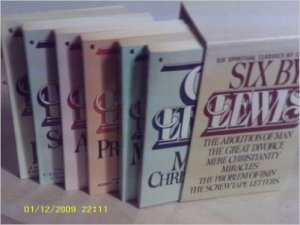
six by lewis

photo of this ancient relic courtesy of an amazon.com customer

I was too excited I had this list to be embarrassed. Only in retrospect do I shake my head. Proof that once a teacher’s pet always a teacher’s pet! And how happy was I (mixed with embarrassed) when I went home to my parents’ house and saw this exact set of books sitting right alongside my Narnia set. (It was actually Six by Lewis, because The Great Divorce was thrown in as a bonus, I guess.)

How about you? Have you read “The C.S. Lewis Five”? Which one is your favorite?


*J/K.

**My personal favorite.

***Or maybe this one is.