Alicia: My Story, A CYL Book for the Ages

“What’s your favorite book?” This is one of the questions I get the most from people. And I have so many that I needed to start breaking them down by genre, or other ridiculously narrow categories so as to afford me more favorite slots, such as “My favorite book I read during the years I owned my Scion was…”

Since people have pointed out that favorite means ONE, and my overuse of it was rendering it meaningless, I have exchanged “favorite book” for books that “CYL,” or change your life.
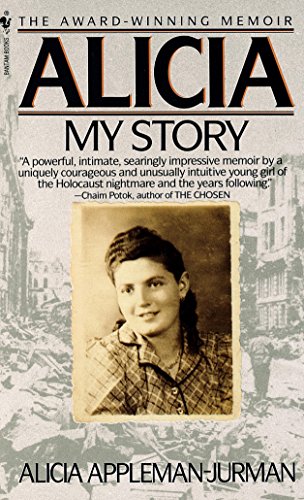
Hands down, one of my absolute top three CYL books is Alicia: My Story by Alicia Appleman-Jurman. I’ve hesitated to write a post about it, because I know I cannot do it justice. But starting today, it is $1.99 on Kindle and other e-book versions. I don’t know how long that deal will last, but it has compelled me to finally post about it.

I love reading or watching anything about or set during WWII (see: shout out for The Book Thief, another CYL book). I also love memoirs and biographies. I also love books featuring strong female protagonists (Katniss was NOT the first, y’all). Alicia is all of those and more. I happened upon the book during a browsing session at Barnes & Noble on Shattuck Ave (we hardly knew ye). The title and cover don’t exactly scream, “Read Me,” but for whatever reason I picked it up, and boy, am I glad I ever did.

We were going through Ruth in our DTs at the time, and perhaps that colored my perspective as I got to know Alicia’s life story. As she lost each of her family members to the Nazis (I’m not giving away any spoilers, don’t worry), she continued to survive, with only her wits as well as the help of others. What was astounding was she didn’t allow her circumstances to overwhelm her or justify being selfish, but she continued to think of others. She ended up taking care of thousands of orphaned children, counseling them, mothering them, providing for them, when she herself had her own traumas and needs to tend to. All this would be admirable enough, but then every once in a while, she would mention things like, “I would soon be 14.” And you’re like…WHAAAAT?!?!

To date, reading Alicia the first time was one of the most moving reading experiences I have had. Alicia came to me at just the right time in my mid-20s. As I studied the life of Ruth, and got engrossed in the life of Alicia, I had this moment of, “My life is truly a picnic” and I committed to stop complaining about my life and how “hard” it was to deal with x, y, z first-world problem.

Then I proceeded to tell everyone around me to read it, and stocked up on copies to give away. I think Michelle from Gracepoint San Diego church was one of the first. And she couldn’t put the book down either! She would read it while Stephen was at soccer practice. ðŸ™‚ Over the years I have gifted it to many people, sometimes with a forceful, “You HAVE to read this.” Some people I remember for sure are Sandra from Gracepoint Davis church, Mia and Susan from Gracepoint Minneapolis church, Lydia from Gracepoint Los Angeles church, Anna, Christine, Hannah, Elise, pretty much any of my housemates over the years, and countless others…you can try asking random sisters if they’ve read it if you want to find out how they liked it! I think I’ve recommended it to many brothers as well. 🙂

While the book isn’t as well known as Night by Elie Wiesel, it is every bit as worthwhile a read. Alicia settled in the Bay Area when she came to the U.S., and devoted her life to sharing her story as a survivor of the Holocaust, especially with students. I therefore had the opportunity to meet Alicia in 2003, when she came to speak at the high school where I used to teach. It was before the era of always having a camera with me, so I do not have a photo of our meeting. But to prove that you can remember a life experience without a photo, I can still feel the firmness of her handshake and the attentive focus of her eyes as we had a short exchange, and I was able to express a bit of how her courage inspired me and so many others I have passed her story onto.

All this to say, I highly recommend this book for anyone who is in about 5th grade and up!

Have you read Alicia: My Story? Were you one of the ones I “forced” to read it? What books have “changed your life”?
The Case For Books (see what I did there?)

Many people at Gracepoint Berkeley church are rushing up to me saying variations of, “I’m *so* motivated and excited to read more books! But I haven’t read a non-required book in ____ years. I don’t know where to start!” After finding out a little more about people’s reading histories, I often recommend that people start with Lee Strobel’s The Case for _____ books, especially because many people associate Christian books, especially books on apologetics, with words like difficult, dry, boring, complicated, and are demotivated before even starting.

case for christStrobel, a former atheist, traces his journey to faith through his 1999 book, The Case for Christ: A Journalist’s Personal Investigation of the Evidence for Jesus. What I love about his books is that they are very accessible to the everyday person. While it is an apologetics book, it also reads very much like a story — it is investigative journalism, after all — and Strobel uses his background in journalism to weave in details, and even develop tension as he chronicles his own grappling with the evidence he encounters. It is both a compelling and edifying read!
For each chapter, Strobel investigates a different tough question regarding Jesus, through an interview with Christian apologists and theologians, including J.P. Moreland, Greg Boyd, and William Lane Craig. It is a great book for Christians who want to learn the evidence for why you believe what you believe, or how to present the evidence clearly and concisely. I’ve also found it is a great book for people who are not Christians, but seekers who are open to, or in the process of investigating the claims of Christianity.

Additionally, for each of The Case for… books, there is a “Student Edition” (middle and high school range) and a “For Kids” edition (for about 9-12 year olds). Bibliopolis patrons of all ages attest to how great they are.

The kindle version of The Case for Christ is currently $1.99! People often ask me my opinion on e-books. And while e-readers have done a fabulous job of simulating the sense of progress and even the act of flipping a page, I still think reading and holding a physical book, flipping and (sometimes ripping) actual pages is the best reading experience. But I’m no e-reader hater. I even like audiobooks (gasp!). I was kind of snobby about it all for a long time, but I’ve come to appreciate the pros and cons of all sorts of reading. In the end, reading an e-book is better than not reading any book. (You have to re-read that last sentence out loud…I’m on a roll today!)

Have you read any of “The Case for” books? Which is your favorite? (Mine is The Case for Faith.) What’s your take on e-books? Are you a proponent? Opponent?

Back to the Future Day: Three Time-Travel Books

backtothefutureday

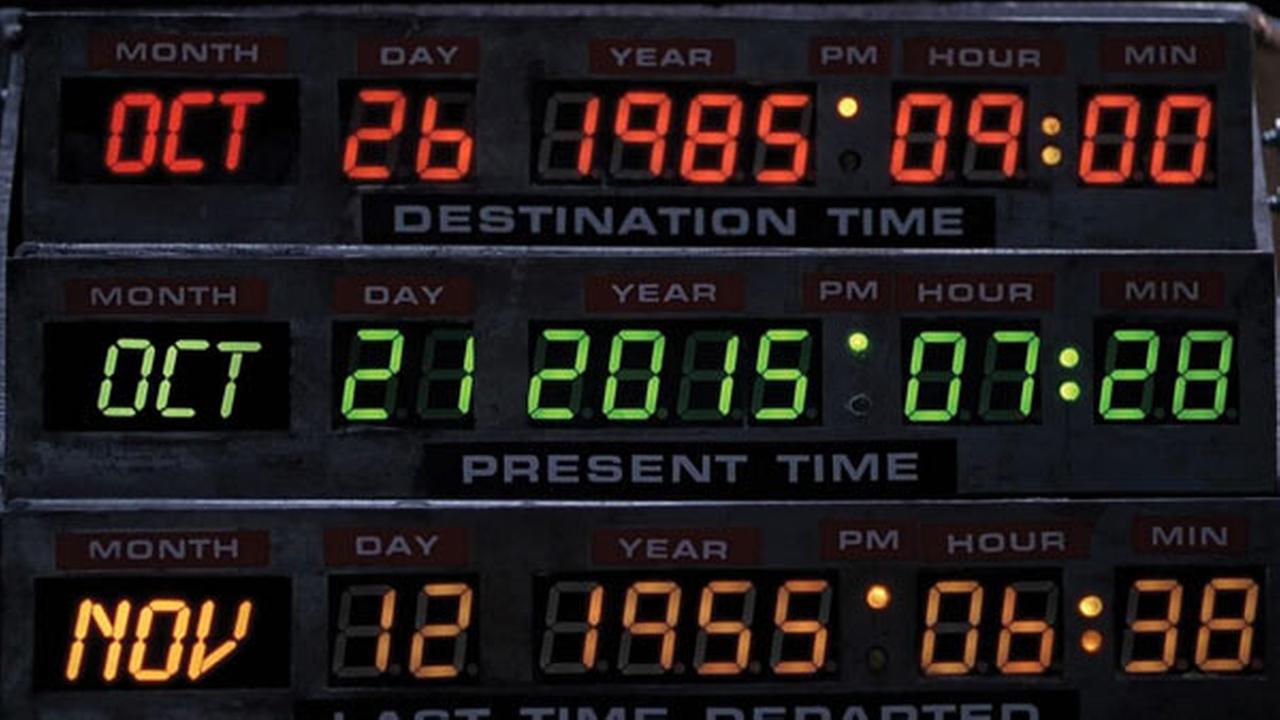
Video conferences, check. Video glasses, check. Hoverboards? Still waiting!

In honor of Back to the Future Day, the day Marty McFly travels to in Back to the Future 2 — yep, I saw it in the theaters in 1989! — I will give you a super short list of three very different time-travel books. I happen to love the time-travel motif, and often choose it as the superpower I would choose in those lovely ice-breakers. But I’ll tell ya, there is a lot of mediocre time-travel fiction out there. I consider the three in today’s list worthy of your time (nyuk nyuk) for different reasons.

A_Yankee_in_the_Court_of_King_Arthur_book_cover_1889

What the 1889 edition looked like.

[1] A Connecticut Yankee in King Arthur’s Court by Mark Twain (1889). We’ll start exactly 100 years earlier, in the other 80’s, the 1880’s. Most people have only read The Adventures of Tom Sawyer and Adventures of Huckleberry Finn. And maybe The Prince and the Pauper. All good books, all good books. If you’re looking for a “classic” to read, and you’re a fan of Twain, you can expect social satire in this novel about a man from 19th-century Connecticut who, after a blow to the head, wakes up to find himself in King Arthur’s Camelot. Twain’s darkly comical commentary on the vestiges of Middle Age mores in his day make for a book that makes you chuckle as well as go “hm…” It’s funny to think of this book as a kind of “science fiction” or time travel, since in our 2015 minds, the 19th century “present” is so far back in the past. Apparently, there were several time-travel books published right around this book. So you see that there were fads in fiction even back then!

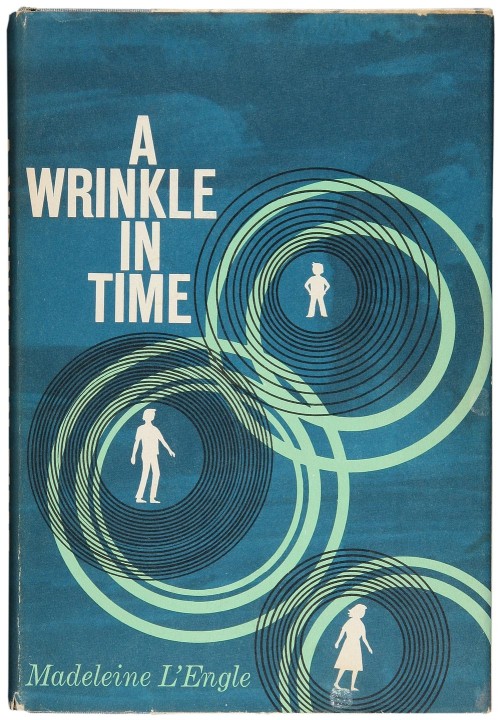
WrinkleInTimePBA1

The first edition cover. Very 60’s.

[2] A Wrinkle in Time by Madeleine L’Engle (1963). I’m including this in the list, only because I’m interested in your opinions on this book. I confess that I’ve never made it all the way through the book, though I’ve started several times ever since I was a young girl. I can name-drop Tesseract, Meg and Charles, and I know what the wrinkle in time refers to, but I can’t have a discussion about this book with my friend Christina. I also know that this book is a common class read aloud in schools, and that it is considered a “classic.” I also know that L’Engle is Christian, but that her books are considered somewhat controversial. This book has moved up my TBR pile, and today being BttF Day, I will move it up a few more slots, since a lot of kids have read or are considering reading this book.

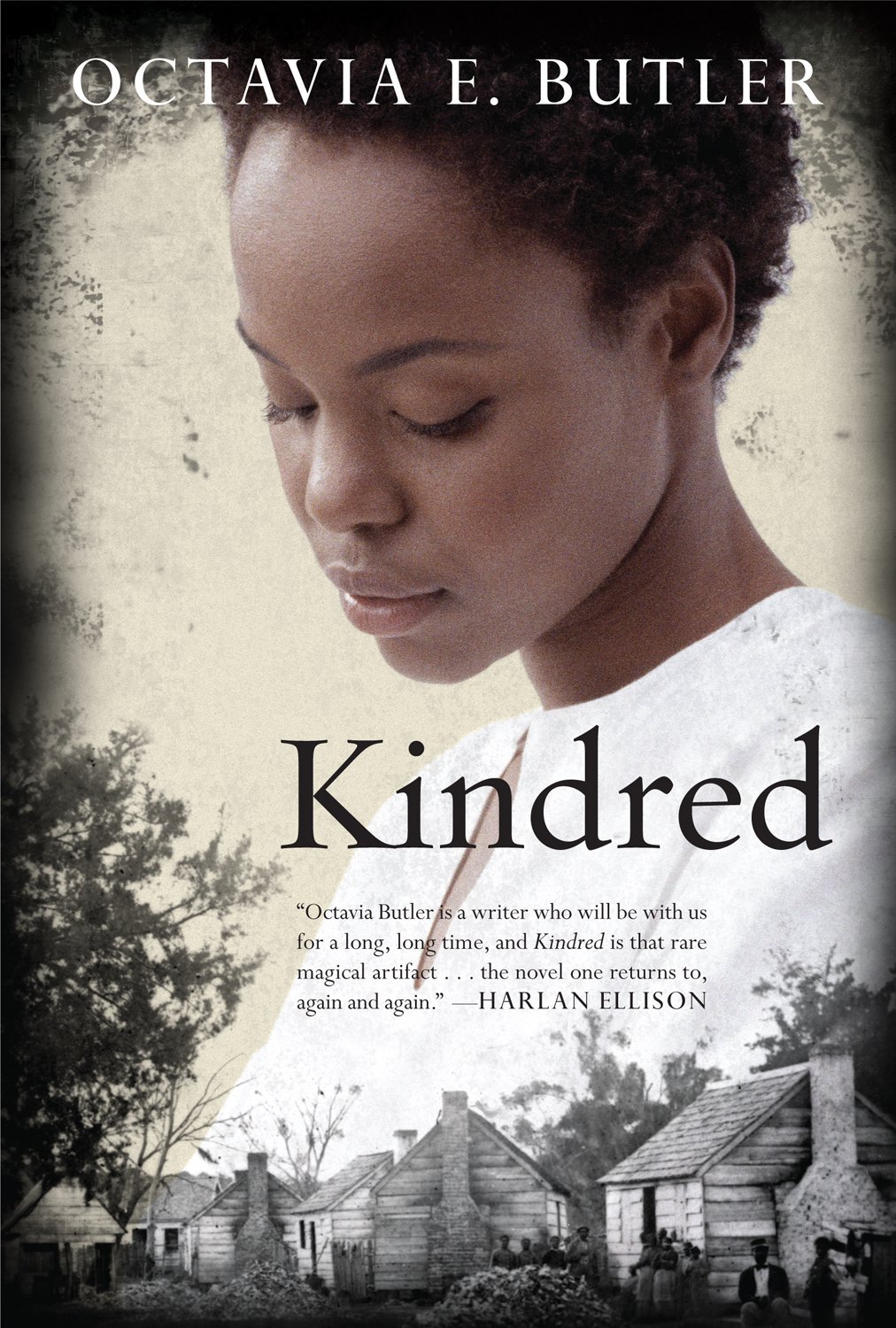
kindred

Not your typical sci-fi novel.

[3]  Kindred by Octavia E. Butler (1979). This is a lesser-known book, but one I liked quite a lot back in 2001, when I had to read it because it was one of the lit circle/book club options for the 12th-grade English class I was teaching. Octavia Butler wrote science fiction, and her story as an African-American woman writer coming up during the Civil Rights Era is fascinating in its own right. Kindred is cool because it is difficult to classify in one genre. Is it realistic time-traveling science fiction? Historical fiction slave narrative? A mystery? Dana is a lawyer living in 1976, and she starts traveling back to a plantation in antebellum Maryland. You find yourself pulled into her story, just as she is discovering her own connections to this past. This book is not sparing in its depiction of slavery’s dehumanizing cruelty, and for that reason, this book is definitely upper high school to adult. This might be a good book for someone who isn’t that familiar with slave narratives, but isn’t up for reading denser, though very compelling memoir accounts like Solomon Northup’s Twelve Years a Slave.

How about you? What are your favorite books featuring time travel? Do you want to chime in about A Wrinkle in Time