We will have occasional book reviews written by Bibliopolis patrons themselves. Today’s review is written by Elise, who is an 8th grader in our Gracepoint church’s Element Youth Group.
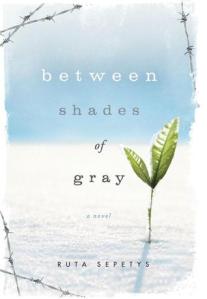
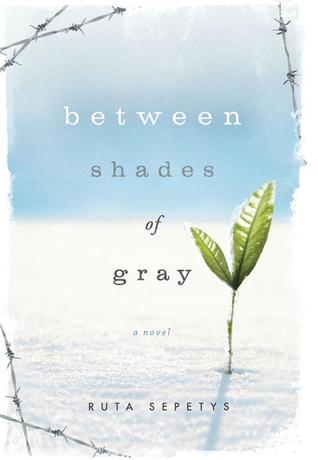
This is the original cover art. See the updated cover at the end of the post.
So far this year, I was able to read 30+ books to enter the Summer Reading Camp (DANSE-PO NBA). Out of these thirty books, the one I enjoyed the most is a book called Between Shades of Gray, written by author Ruta Sepetys. After reading through this book, it became one of my favorites, and today I will tell you why.
First of all, this book was written from the perspective of a young teenage girl who’s struggling through the times of Stalin’s regime. The book starts in 1941 in Lithuania, and follows the characters to the Siberian work camps. I personally enjoy books written for that time, because such a historical time filled with such horrific memories creates tear-jerking and heart-warming stories. Anyways, because of the time period in which the story was set, it was made emotional, and I was, at some times in the book, moved to tears. (Which, I must admit, doesn’t happen to me often).
In addition, the main character, Lina, was an artist, which shaped her character in the story. In that way, I related to her well, and the ways that she pushed through the struggling times in the story through art was so understandable to me. I also really thought her as an inspiring character, because of her bravery, and her strength to survive. Personally, if I were in her shoes, I wouldn’t have wanted to even live anymore after just the first of what she went through. Instead, she found ways that she should live, thought things through, and cared so much for the people around her besides herself. Her family meant everything to her, and she did anything to keep them going, whether that meant working harder to get extra food and time to care for them, and even stealing.
Another character I really appreciated in the story is a boy named Andrius. Of course, you would expect Lina and Andrius to have some sort of romantic relationship, but I think it was more subtle than a typical teen boyfriend-girlfriend relationship. It’s more like a good friendship she needed during that difficult time. It must have been so much more strengthening to have someone by your side. Andrius was perfect for that position in Lina’s life. He really lifted her up and made her days less dark. He understood her, and was there for her, even when it seemed like no one was.
The events that filled every page made the whole book exciting. I just couldn’t put it down! The only thing that made the book a little less readable for younger people is for its few questionable parts. I was advised by an older friend to skip a chapter. Though questionable, I understand that some of those kinds of horrible events actually happened during those times, and more often much worse. Because of these certain parts, I would recommend this book to the age group of around 13 years old and older. And if you like tear-jerkers, this book is for you!
The ending of this book… [Emily has redacted portions of this review to avoid spoilers.] In it is a short letter explaining [redacted to avoid spoilers]…bittersweet. And that is why I love this book.
 Emily here: To the left is the cover art for the paperback edition. Can we agree that the hardcover art is far superior? It is subtle and symbolic, with the sapling growing out of the snow, and the barbed wire lining the corners. This one with the eye is a bit…too close!
This is one of my favorite historical fiction novels, and about one of my favorite periods in history — the World War II era. I loved this book especially because there are so many books written about the Holocaust, but this one is about the horrors of the Balkan genocide under Stalin’s rule. Like Elise said, I would recommend this book for 8th grade and up. The chapter she was referring to contains some soldier brutality and alludes to abuse of the women (it is not graphic, though horrible).
This was Ruta Sepetys’ debut novel, and her story was influenced by a visit she took to Lithuania to visit her relatives.
Here is a video where Sepetys talks about her book and the story behind the story.
Ruta Sepetys discusses her novel, Between Shades of Gray from Penguin Young Readers Group on Vimeo.

 Acts2 Books