As promised, I shall tackle the most commonly asked question from the parents of Gracepoint Berkeley church: “At what age is it ok for my kids to read Harry Potter?” One resource I check for age recommendations for books and movies is Common Sense Media, which is pretty fair. However, I’ve learned that I need to read more carefully as to the reasons for their recommendations. And in the case of Harry Potter, we diverge quite considerably, as you will see if you compare my thoughts with their Harry Potter Age-By-Age Guide, which has them starting at 6 years old.
Going by straight reading levels, some kids might be able to read them starting in 2nd grade, but the question is regarding the themes and content. You know your child the best, so you’ll need to exercise judgement, and consider their reading level, their temperament, how scared they get, how comfortable you are with some mature themes, and so on.
So please regard these as general guidelines to help you in making those decisions.
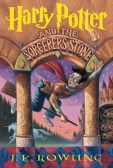
#1 – Harry Potter & the Sorcerer’s Stone: 3rd-4th grade (8-9). This is mainly because it’s a slippery slope, and once a kid starts the series, they’ll want to devour the rest! Harry and his friends are 11 years old in this book. (Each book covers the duration of the school year.)
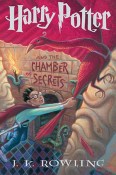
#2 – Harry Potter & the Chamber of Secrets: 3rd -4th grade (8-9). Again, this recommendation is mainly because once a kid reads #1, they will immediately want to read #2, but I would caution every parent to be mindful of book 2. While the book overall remains magical and wonderful, the fact remains that Tom Riddle possesses Ginny, and that’s super scary. Parseltongue can scare kids too. I’ve surveyed some of the older kids, and one said, “I actually thought book 2 was the scariest of all of them.”
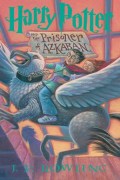 #3 – Harry Potter & the Prisoner of Azkaban: 4th grade (9-10). More of the same, thematically. The Marauder’s Map is nifty. On the scare alert, dementors make their first appearance in book 3. In general, I encourage you to talk with your kids often about fantasy books they read, so they get a clear sense of what is fantastical (i.e. shape-shifting) and what is realistic.
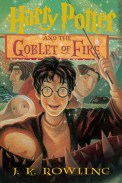 #4 – Harry Potter & the Goblet of Fire: 5th grade (11ish). Harry and his friends are now 14 years old. So while the main plot centers around the Tri-Wizard Tournament, the series takes a decidedly “teen” turn in this book. Harry has a major crush on Cho Chang, and Rowling does a good job describing the overall awkwardness of adolescence. But there’s a whole lot of excitement about who’s going with whom to the Yule Ball, and people getting in trouble for kissing and stuff. And while there are deaths in each of the Harry Potter books, this book has the first death of one of the friends. It’s different from a nemesis being vanquished; this death is really sad and upsetting for readers as well as for Harry and his friends.
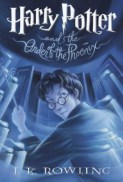 #5 – Harry Potter & the Order of the Phoenix: 6th grade (12ish). As I vented about last week, this book has 15-year-old Harry in the throes of of some teenaged angst and anger. This is also the book where Dumbledore’s Army starts, and the kids get serious about fighting Voldemort. Harry has his first kiss in this book.
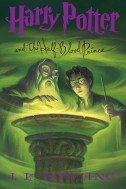 #6 – Harry Potter & the Half-Blood Prince: 6th-7th grade (12-13ish). Harry and his friends are 16, so expect teen drama. There are “love triangles” and lots of “snogging.” (Which the movie makes the primary focus, rather than the entire story line of the half-blood prince, but I digress.) There are two super sad deaths of beloved characters in this book. And you learn about horcruxes and soul-splitting, so that’s pretty scary, and also an opportunity for interesting conversations with your kid.
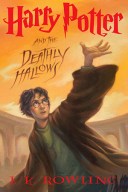 #7 – Harry Potter & the Deathly Hallows: 7th (13ish). Similar to book 6, except more. More deaths. More romance. (And a very memorable, directed swear word that is used to communicate the ferocity of a mother’s love.)
I know that realistically, once a child starts the series, it’ll be hard to stretch it out for five years, if you go according to my age suggestions! So it’s really up to you as a parent, and I strongly recommend having conversations with your child about the books throughout. NOT quizzing them on the books, but just talking about characters and what they’re like, or interesting plot devices — would you want a time-turner? What about Felix Felicis? What do you think about the patronus thing? You could talk about any of the myriad themes around friendship, loyalty, honesty, loneliness, revenge, home, and more.
As for the movies, bear in mind that movies #1-3 are rated PG, and #4-7b are rated PG-13. But I would recommend 3rd grade and up for watching even film #1, since there are frightening elements from the get go. There are adults I know who couldn’t watch any of the films because they would keep replaying some of the scarier scenes, and have trouble sleeping. (Personally, I can’t quite look at Voldemort straight on without cringing. The no-nose thing.)
Again, every child is different, so I hope that this helps a little.
I’d love to hear from some of the parents. How did you determine what age was appropriate for the books and/or movies for your child?
 Acts2 Books